
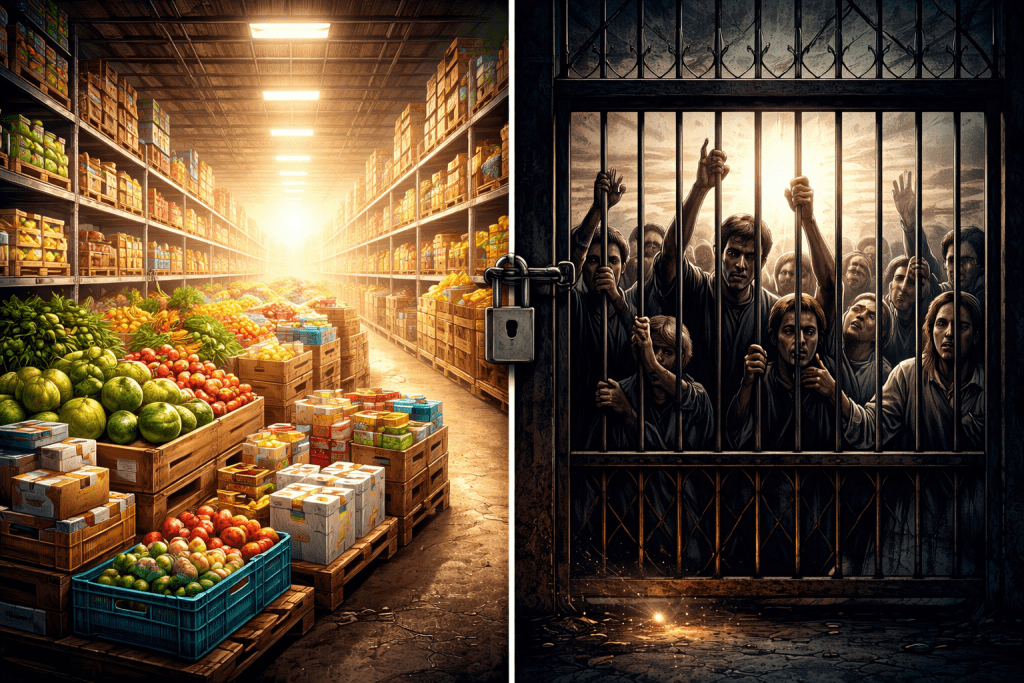
Humans require very little to survive.
Not luxury.
Not status.
Not even comfort.
Just four things:
food
water
surface area
energy
Everything else is built on top of that.
Every system.
Every economy.
Every hierarchy.
If those four things are abundant,
then survival is guaranteed.
If they are restricted,
then survival becomes conditional.
This is where things change.
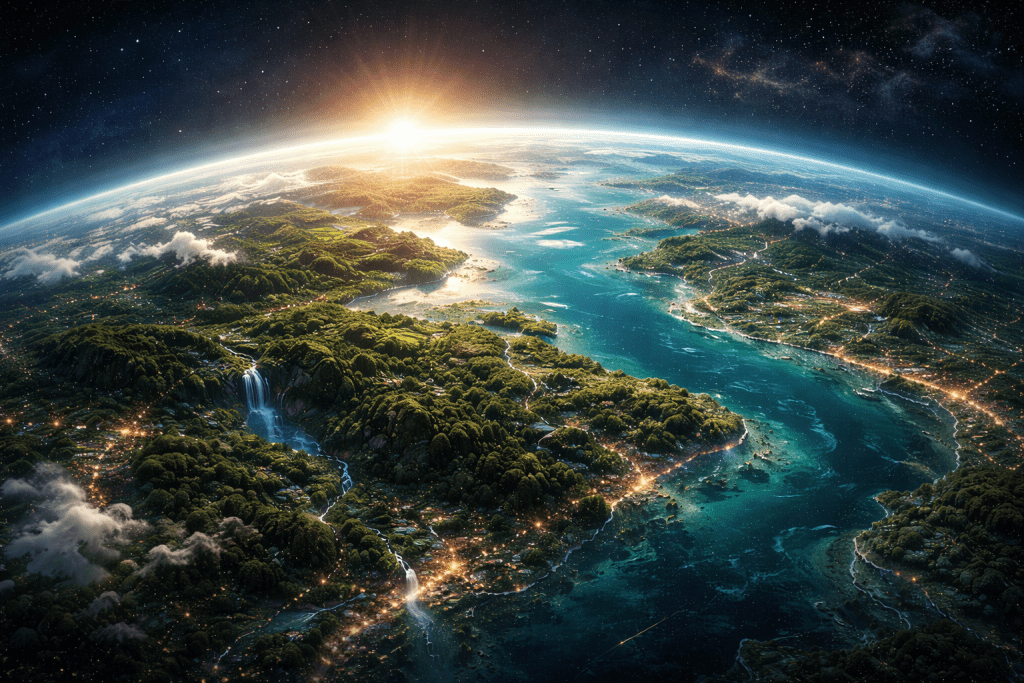
We live on a planet that produces immense abundance.
There is enough sunlight hitting the Earth every hour
to power human civilization many times over.
There is enough food produced globally
to feed everyone alive today.
Water cycles continuously through the planet.
Land exists in vast quantities—much of it unused or underused.
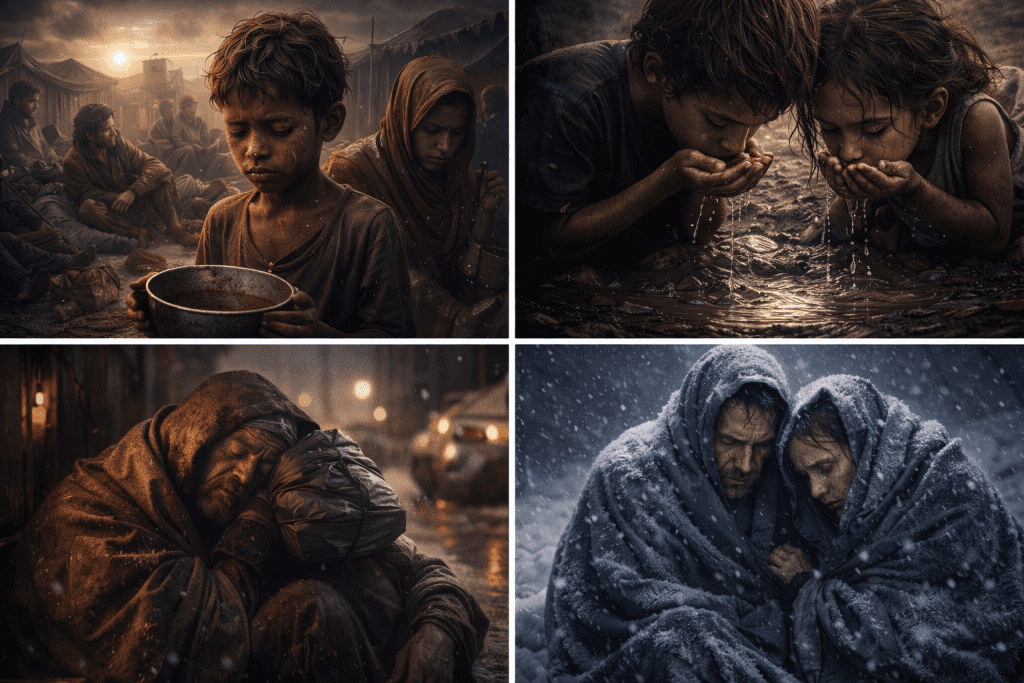
And yet—
people go hungry.
people go thirsty.
people sleep outside.
people freeze.
Why?
Because access is controlled.
Food is not distributed based on need.
It is distributed based on purchasing power.
Perfectly edible food is thrown away
because it cannot be sold.
Water is not always free.
It is packaged, priced, restricted, and sometimes shut off.
Surface area—land, housing, space—is treated as a commodity.
Not something to exist on,
but something to own.
Empty homes exist alongside homelessness.
Energy—arguably the most important of all—is abundant in nature.
Sunlight, wind, heat.
But access to usable energy is gated behind infrastructure,
ownership, and cost.
None of these scarcities are purely natural.
They are structured.
We have built systems that take abundance
and convert it into controlled access.
This is artificial scarcity.
And once you see that—
everything changes.
Hunger is no longer just a tragedy.
It becomes a question.
Thirst is no longer just unfortunate.
It becomes a design problem.
Homelessness is no longer inevitable.
It becomes a structural decision.
Artificial scarcity is what allows
the Machine of Death to function.
Because if survival requirements were freely accessible,
the machine would lose its leverage.
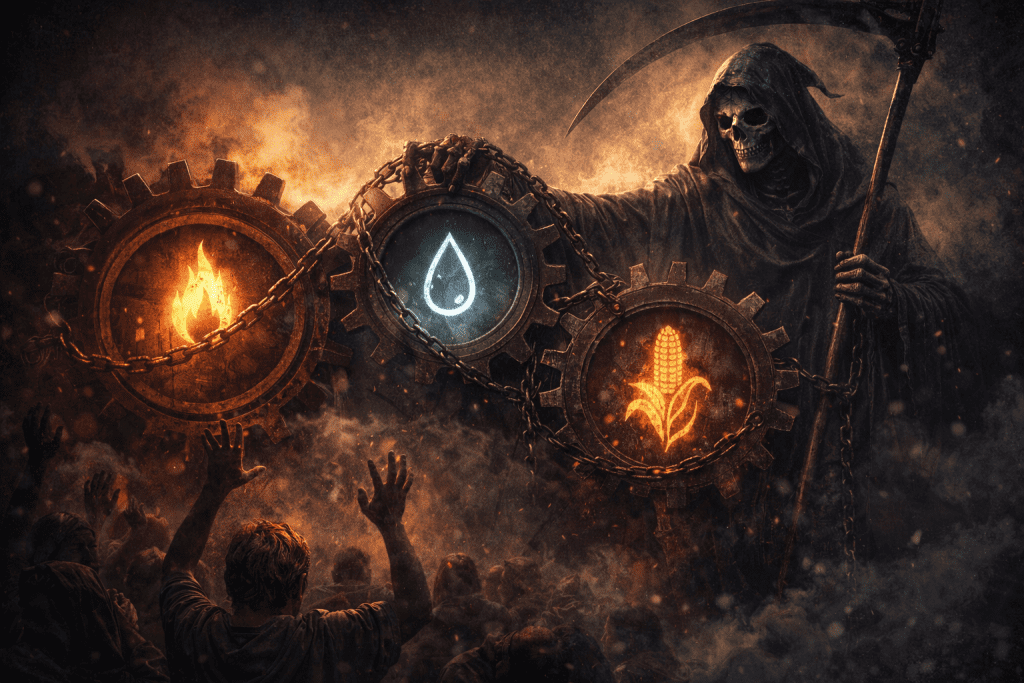
The system does not need to harm people directly.
It only needs to control access
to the things people cannot live without.
And with that control,
everything else follows.
The question is no longer:
“Do we have enough?”
The question is:
Why is access limited…
when the foundation is abundant?
And the next question:
What happens if we stop limiting it?