
⚡ The First Order
The first large request to the Foundry is clear.
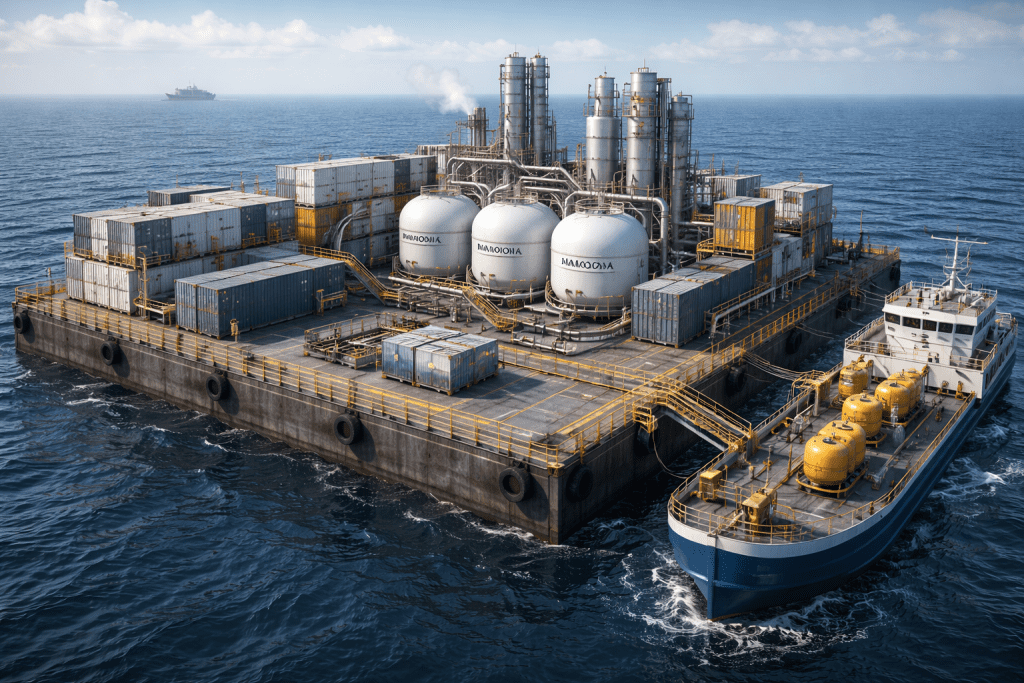
Build ammonia platforms.
🌊 Why This Is Needed
The Grid increases electrical output.
Rapidly.
But energy must be used, stored, or moved.
It cannot remain idle.
🧪 Why Ammonia
Ammonia provides a solution.
It stores energy in chemical form.
It can be liquefied.
It can be transported.
It can be used as fuel.
Electricity is difficult to store and transport at scale.
Ammonia solves this.
🌍 What the Ocean Provides
The inputs already exist.
Water.
Nitrogen.Both are abundant in the ocean environment.
With electricity, they can be transformed into ammonia.
⚡ The Conversion
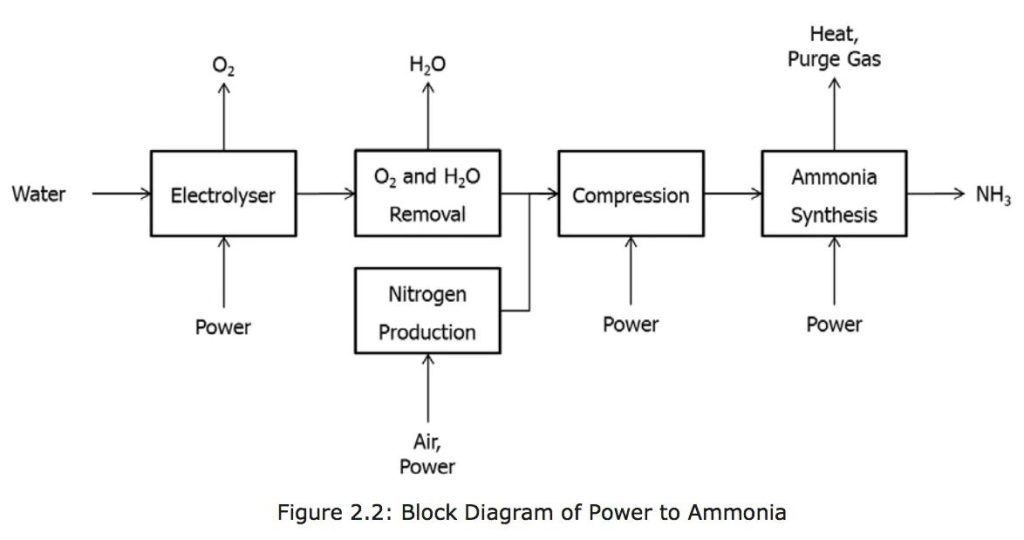
Electricity splits water into hydrogen.
Nitrogen is drawn from the air.
These are combined.
Energy becomes fuel.
🚫 No Anchors
The platforms are not fixed to the seafloor.
They hold position using electricity and automation.
Constantly adjusting.
Remaining in place without anchors.
🌐 What This Enables
Energy no longer needs to stay where it is produced.
It can be stored.
It can be moved.
It can be delivered anywhere along the Grid.
Electricity becomes fuel.
⚖️ Two Modes of Production
Not all ammonia is produced the same way.
There are two approaches.
⚡ High Efficiency — Low Rate
This system is optimized for efficiency.
It uses less energy per unit of ammonia.
It produces slowly.
It is stable.
Predictable.Designed for long-term output.
🔥 Low Efficiency — High Rate
This system is optimized for speed.
It uses more energy.
It produces at a higher rate.
It responds quickly to demand.
It prioritizes output over efficiency.
🧠 The Tradeoff
One conserves energy.
One accelerates production.
Both exist for a reason.
🌍 Choice
Participants choose how production happens.
Efficiency or speed.
Stability or output.
The system does not decide.
The network does.
The system adapts to what people choose to prioritize.
📦 Why Containers
The system is built using containers.
Not because they are perfect—
but because they already exist.
🌍 A Universal Unit
Containers are a global standard.
They move by:
- truck
- rail
- ship
The infrastructure is already in place.
Nothing new is required to move them.
⚙️ Rapid Deployment
Containers can be prepared in advance.
Systems are built, tested, and sealed inside them.
When needed, they are delivered and placed into position.
Construction becomes placement.
🧱 Stackable Systems
Containers are designed to stack.
They lock into place.
They form stable structures quickly.
Platforms can be assembled without custom fabrication.
🔁 Replacement and Scaling
If a unit fails, it is removed and replaced.
If more capacity is needed, more units are added.
The system grows by replication.
Construction becomes assembly.
🏗️ Setting Up the Modular Factory
The Foundry does not build everything itself.
It coordinates.
🌍 Distributed Construction
Individuals and organizations prepare the units.
Containers are upgraded into working systems.
Not in one place—
but everywhere.
🏙️ Where It Happens
Existing space is used.
Industrial parks.
Vacant lots.
Unused land.Even backyards.
⚙️ Assembly
Each container becomes a functional unit.
Built, tested, and prepared locally.
When complete, it is ready to be moved and integrated into the system.
🌐 Investment
Every factory is open to participation.
The world can invest in each unit.
Capital flows into construction.
⚡ Power
Investors do not only fund the system.
They power it.
Energy is supplied through the Grid.
Production begins when energy flows.
🔁 What This Creates
Factories are no longer centralized.
They are distributed.
Built in many places.
Connected into one system.
The factory is wherever a container is prepared.
📦 Required Containers
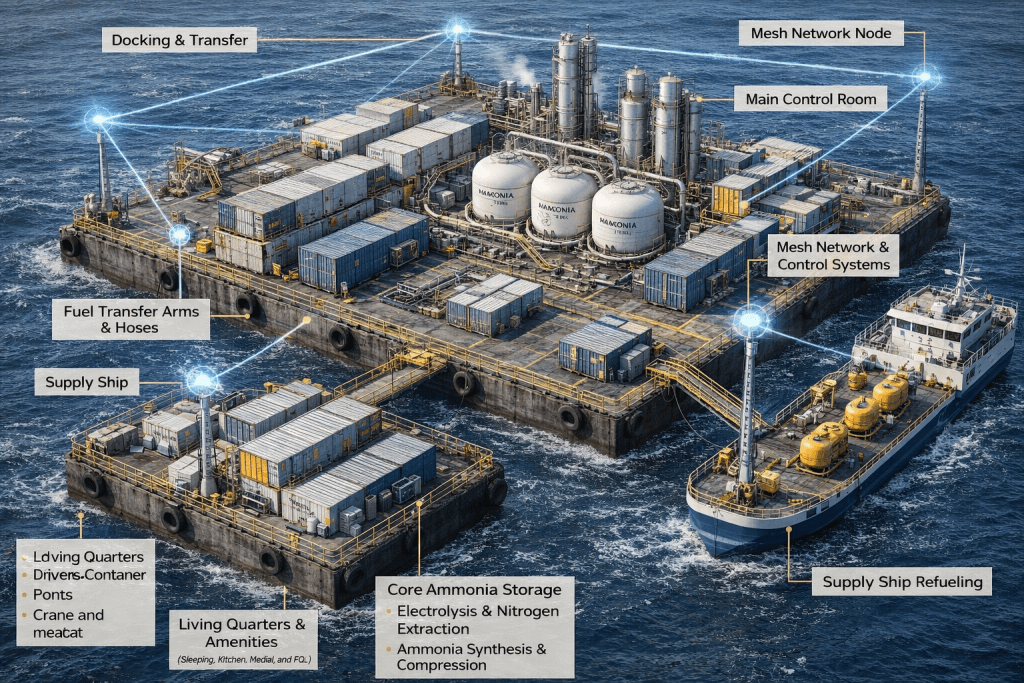
Each platform is built from a set of functional units.
Each unit is a container.
🧪 Production
These containers create ammonia.
- Electrolysis units
- Nitrogen extraction units
- Ammonia synthesis units
- Cooling and heat management units
💧 Input Systems
These containers prepare raw materials.
- Seawater intake and filtration
- Desalination systems
- Air intake and processing
⚙️ Power and Control
These containers manage the system.
- Electrical conversion and distribution
- Battery / energy buffering
- Control room and automation systems
- Monitoring and safety systems
🏗️ Storage and Transfer
These containers support fuel handling.
- Ammonia handling and transfer control
- Pumping and compression systems
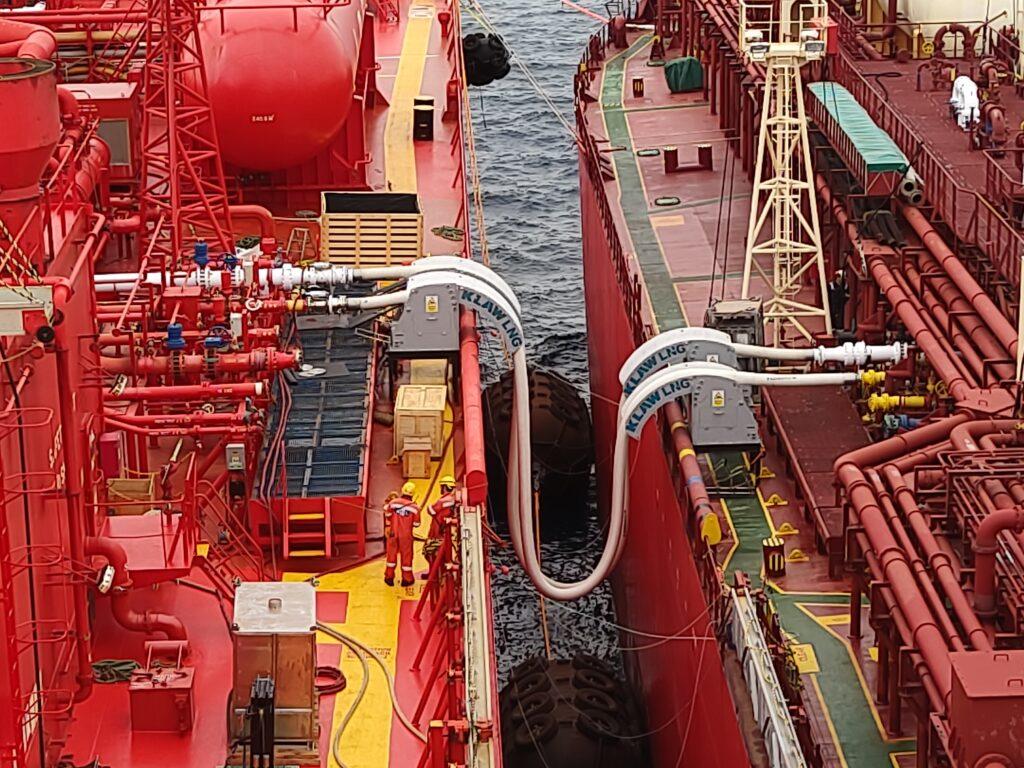
- Hose and docking support equipment
(Note: bulk ammonia storage is handled by larger tanks on deck, not only containers.)
🌐 Network
These containers connect the platform to the world.
- Mesh network systems
- Communication and routing systems
- External antenna support
🏠 Living
These containers support people.
- Sleeping quarters
- Kitchen and dining
- Sanitation and laundry
- Medical and administrative
🔧 Utility
These containers support operation and maintenance.
- Workshop and tools
- Spare parts storage
- Crane and cargo support
- General-purpose modules
🔥What this opens up is a true global marketplace…