
A global electrical and internet infrastructure already exists.
But today, it is used almost entirely for the internet.
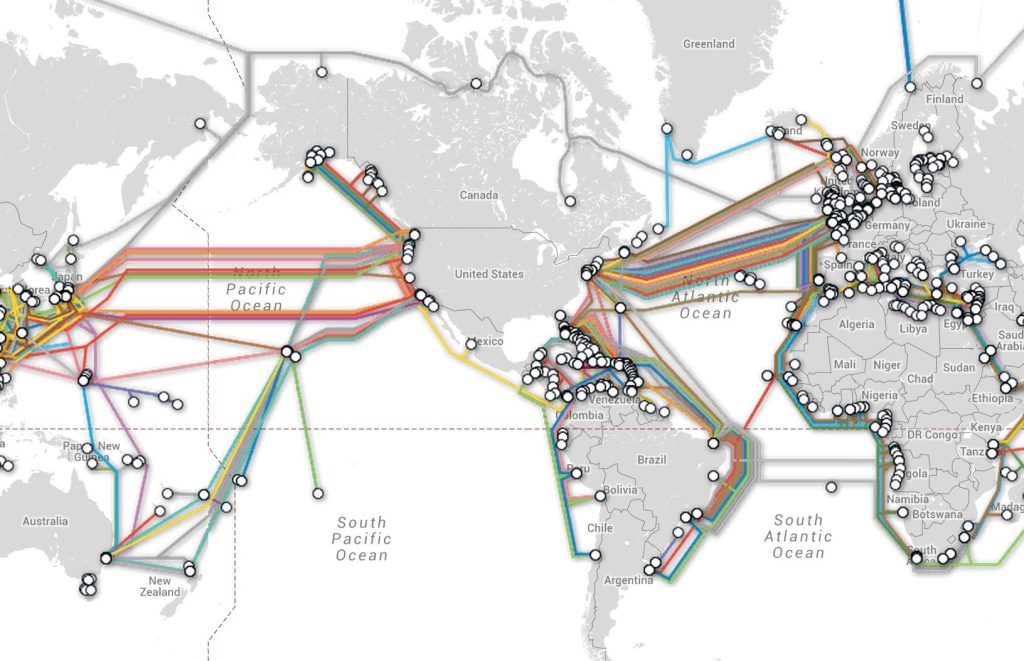
Our new Ocean Grid will be a floating transmission layer suspended below the surface of the sea.
It is designed to carry both electricity and fiber optic internet across open water, while staying below ship traffic and above the most difficult depths of the ocean floor.
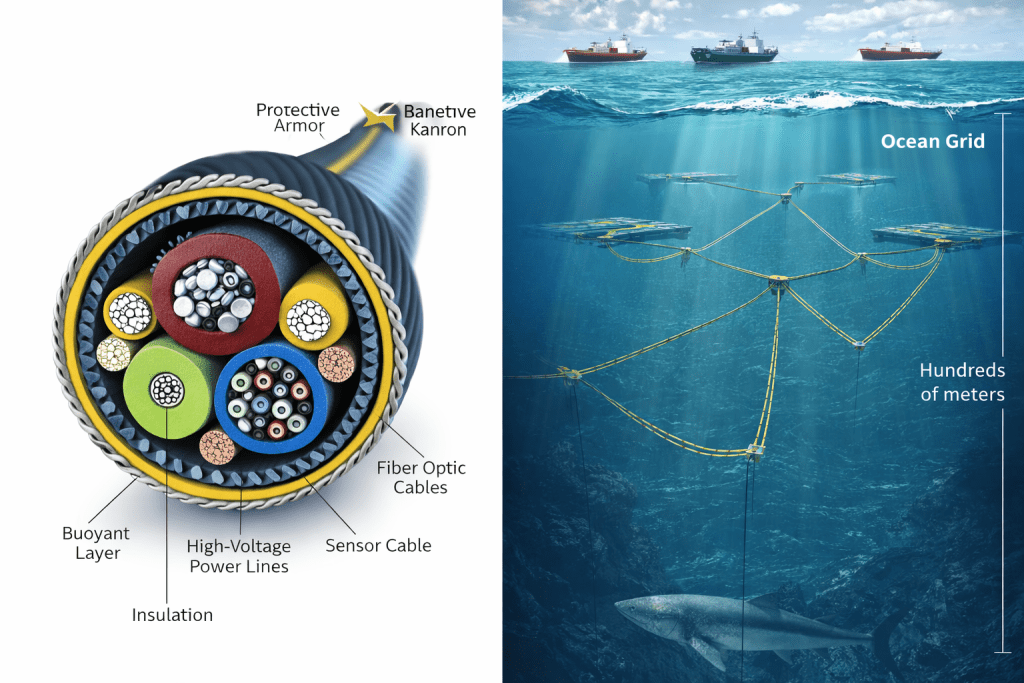
⚡ What Flows Through the Ocean Grid
The Ocean Grid is not a single-purpose system.
It carries two things at once:
electricity and information.
Inside each line are high-voltage conductors, transmitting energy across long distances. Alongside them run fiber optic strands, carrying data as pulses of light. Power and communication move together, in the same structure, across the same network.
This is not new technology. Both systems already exist.
What is new is combining them into a single, continuous layer across the ocean.

🌊 The Structure in the Water
The Grid does not sit on the ocean floor, and it does not float at the surface.
It exists in between.
Suspended below the surface, each line is held in place by a network of floating units. These units—barges or platforms—form the visible points of the system. Beneath them, the lines extend outward, linking each node to the next.
The result is not a single cable, but a network.
⚓ No Anchors
Traditional ocean structures rely on anchors.
The Ocean Grid does not.
Each unit maintains its position using electric propulsion and automated positioning systems. Instead of being fixed to the seafloor, the system holds itself in place, constantly adjusting to currents and conditions.
This removes the need for anchors entirely, allowing the grid to exist in deeper water without being tied to the bottom.
📡 A Living Network
Each unit is not just a connection point—it is also a node.
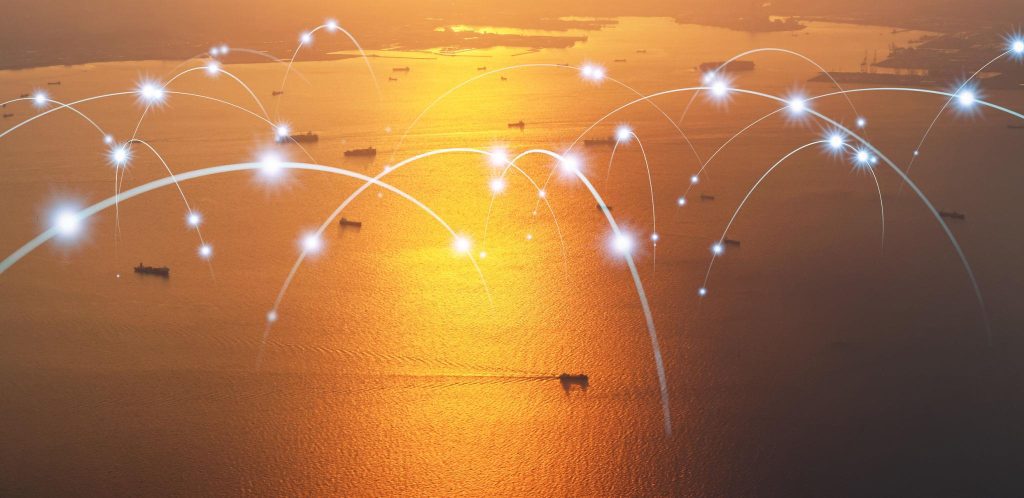
Every platform carries mesh network technology. Together, they form a distributed wireless system across the ocean surface.
Nearby vessels—ships, boats, or even smaller craft—can connect directly.
There is no single tower.
No central point of failure.
Instead, the signal moves from node to node, forming a continuous mesh network across the water.
Where the grid exists, connectivity exists.
🧠 Simple way to understand it
You can think of the Ocean Grid as:
- a power line
- a fiber optic cable
- and a wireless network
all combined into one system, suspended in the ocean.
🌐 The Federation That Builds It
The Ocean Grid is not built by a single company.
It is built by a federation.
🏛️ Ownership
The grid is open.
Anyone can own a piece of it.In the beginning, ownership may concentrate.
But over time, as its value becomes clear, participation expands.

⚡ Access
Access follows ownership.
To use the grid, you either:
- own capacity
- or pay for it
A vessel connecting to the network must hold access rights, or purchase them.
A barge transmitting power must do the same.
🔁 Usage
Ownership grants usage.
If you own part of the grid, you can use that capacity without cost—up to your share.
If you exceed it, you pay.
If you do not use it, others can.
🌱 Expansion
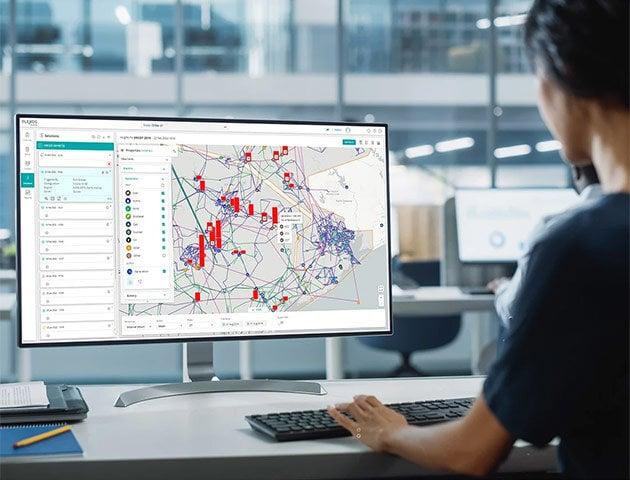
The grid grows where it is needed.
If a region demands access, ownership flows in that direction.
New lines are built.
New nodes are added.Expansion is not planned from above.
It emerges from participation.
The Ocean Grid builds itself.